Text Box/Bag Activity
An Overview
This strategy is used to activate and build background knowledge.
This strategy is used to activate and build background knowledge.
- A text box/bag uses real objects before reading the text to help students connect to the text. In fact, this strategy is useful to "bridge the gap between the words in the text and the objects or concepts they represent" (Miller & Veatch, 2011, pp. 59).
- With the text box/bag strategy, choose objects that are important to understanding the text or use as a preview of vocabulary or main ideas.
- Introducing objects in a lesson can actually heighten students interests, especially for those who do not connect with writing well, and creates a sensory link between the student and material (Sieber, 2012).
- According to Sieber, this method is a great way to improve visual literacy as well (2012).
|
Social Studies Example
Use the text box/bag strategy to assess learning from a chapter.
|
Science Example
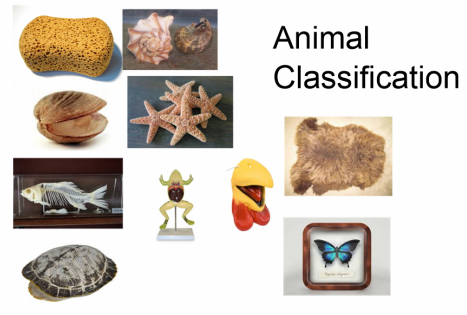
Use the text box/bag strategy to introduce the chapter and excite students for learning.
|
|
The above video shows how to use objects from history in different and creative ways. Using objects can motivate and interest the learner. The presenter encourages analysis of objects to observe, document, and contextualize.
|
The above video shows another way to use the text box/bag strategy as a preview to a lesson on population. Instead of telling students what each represents, the teacher has students discuss with peers what they think their object represents. Students then discuss each object and expand on their knowledge using the objects.
|
Writing Component
The text box/bag strategy is also important to organize and analyze ideas before the writing process.
The text box/bag strategy is also important to organize and analyze ideas before the writing process.
- The common core standard for middle school is as follows: "Introduce a topic; organize ideas, concepts, and information, using strategies such as definition, classification, comparison/contrast, and cause/effect; include formatting (e.g., headings), graphics (e.g., charts, tables), and multimedia when useful to aiding comprehension."
- Using the science animal classification as justification, students can complete much of this standard through the text box/bag activity. Students can use objects to help define the different classification of animals; students can use the objects to correctly classify animals into the right groups; students can compare and contrast the different groups by using the objects as examples. Having this background will help organize their writing and aid in comprehension.
